

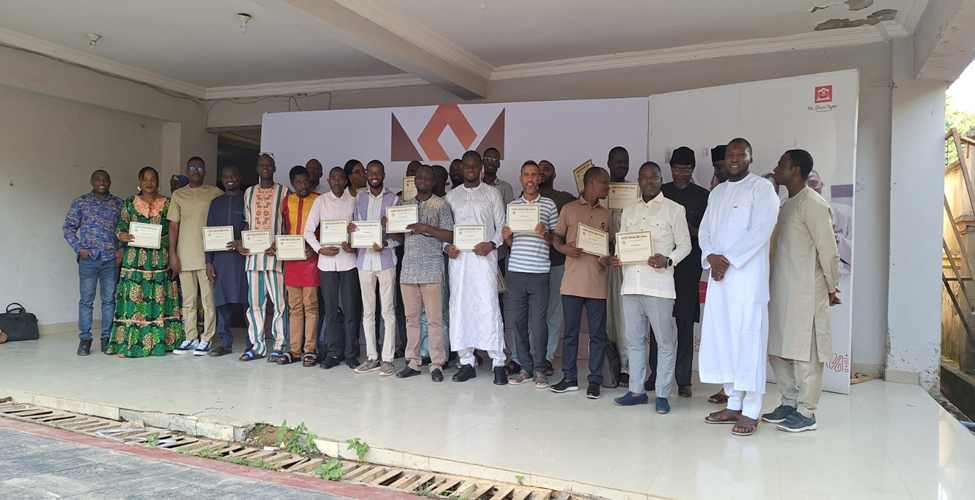
AGRHYMET RCC-WAS Strengthens Climate Forecasting Capacities in West Africa and the Sahel
From 23 to 26 June 2026, the AGRHYMET Regional Climate Centre (RCC-WAS), with support from the WISER PASS project funded by the UK Government, convened a landmark Regional Training Workshop in Abuja, Nigeria. The focus was on advancing objective seasonal forecasting of rainy season onset and cessationusing the WASS2S tool,essential for agriculture, water resource management, disaster risk reduction, and food security across West Africa and the Sahel.
The workshop brought together 19 experts from National Meteorological and Hydrological Services (NMHSs), alongside representatives from ECOWAS and UNDRR. Over four days, participants strengthened their technical skills, exchanged national experiences, and explored the latest enhancements in the WASS2S forecasting system, a cutting-edge tool for agroclimatic seasonal predictions.
Chairing the sessions, Dr. Abdou Ali, Head of the Weather, Water and Climate Department at AGRHYMET, emphasized the importance of harmonizing forecasting methodologies while respecting local climatic specificities. He reminded participants that “a high level of statistical skill alone does not guarantee scientific robustness,” and urged them to prioritize predictors with strong physical bases and to prepare for upcoming regional climate outlook forums such as PRESAGG and PRESASS.
The training was facilitated by AGRHYMET experts Dr. Laouali Ibrahim Tanimoune and Mandela Houngnibo, who guided participants through practical exercises, bias correction techniques, and the operational use of predictors such as soil moisture, sea surface temperature (SST), and wind shear. Their expertise ensured participants gained hands-on experience with the WASS2S forecasting notebooks and successfully resolved technical challenges.
Country-specific findings highlighted the diversity of predictors across the region:
- Mali and Burkina Faso identified soil moisture as a strong predictor.
- Togo and Senegal highlighted SST as highly effective.
- Niger emphasized wind as the most reliable predictor.
Participants also underscored the operational importance of forecasting the cessation dates of the rainy season, linking these forecasts to agricultural planning, water resource management, and early warning systems.
The workshop concluded with 13 actionable recommendations, including developing new WASS2S notebooks for dry spells, extreme rainfall, and seasonal temperature forecasting, deploying WASS2S on cloud platforms to enhance accessibility and performance, and strengthening NMHS capacities through continuous training and certification.
This regional training marked a significant step toward collaboration and harmonization of forecasting methodologies. By equipping experts with advanced tools and knowledge, AGRHYMET is ensuring that decision-makers, farmers, and communities across West Africa and the Sahel benefit from reliable, science-based climate services.
AGRHYMET reaffirms its commitment to supporting NMHSs with technical expertise, fostering innovation in climate forecasting, and building resilience against climate risks in the Sahel and beyond.


About Post Author

